Israel's government services are fragmented, jargon-heavy, and increasingly digital-first. For two large population groups - seniors and new immigrants - this isn't inconvenient. It's exclusionary.
Isaac, 72 — Retired engineer, Tel Aviv
"I just want to know what I'm entitled to without feeling like I need a law degree to use an app."
Spends hours searching for health benefits he may already qualify for
Complex navigation and bureaucratic language trigger cognitive overload
Elena, 29 — Structural engineer, new immigrant, Haifa
"I can build a bridge, but I can't decipher this one-page letter from the tax office."
Fears missing critical deadlines due to language barriers
Has no reliable tool for interpreting official Hebrew documents in real time
Different tasks require different levels of AI involvement. The system separates deterministic processes from open-ended interpretation and routes each to the appropriate interaction model.
Guided Flow
BEST FOR
Eligibility checks, document submission, deadline tracking
INPUT
Structured, step-by-step. Deterministic - clear inputs, clear outputs.
EXAMPLE
Isaac: "Am I eligible for home-care benefit?" → structured checklist
Conversational AI
BEST FOR
Rights inquiry, document interpretation, escalation
INPUT
Natural language. Interpretive, ambiguous inputs, confidence-tiered outputs.
EXAMPLE
Elena: scans tax letter → AI summarizes, flags urgency
In a civic context, an AI that presents uncertain information with false confidence causes real harm - missed deadlines, wrong claims, financial loss. The system uses a three-state confidence model to make uncertainty visible before the user acts.
To minimize cognitive load, the system acts as a "translator" between human natural language and complex bureaucratic requirements. Instead of forcing users to navigate through tedious forms, an LLM engine processes unstructured input- such as voice recordings or free text- extracts relevant entities (dates, names, statuses), and maps them directly into structured form fields. This architecture preserves the simplicity of a conversation while delivering the precision of a structured legal document.
Unstructured Input
Voice recordings or free text input from the user.
LLM Processing
NLP identifies intent and extracts key data entities.
Structured Output
Data is automatically injected into standard form fields.
Each screen resolves a specific tension between accessibility and trust.
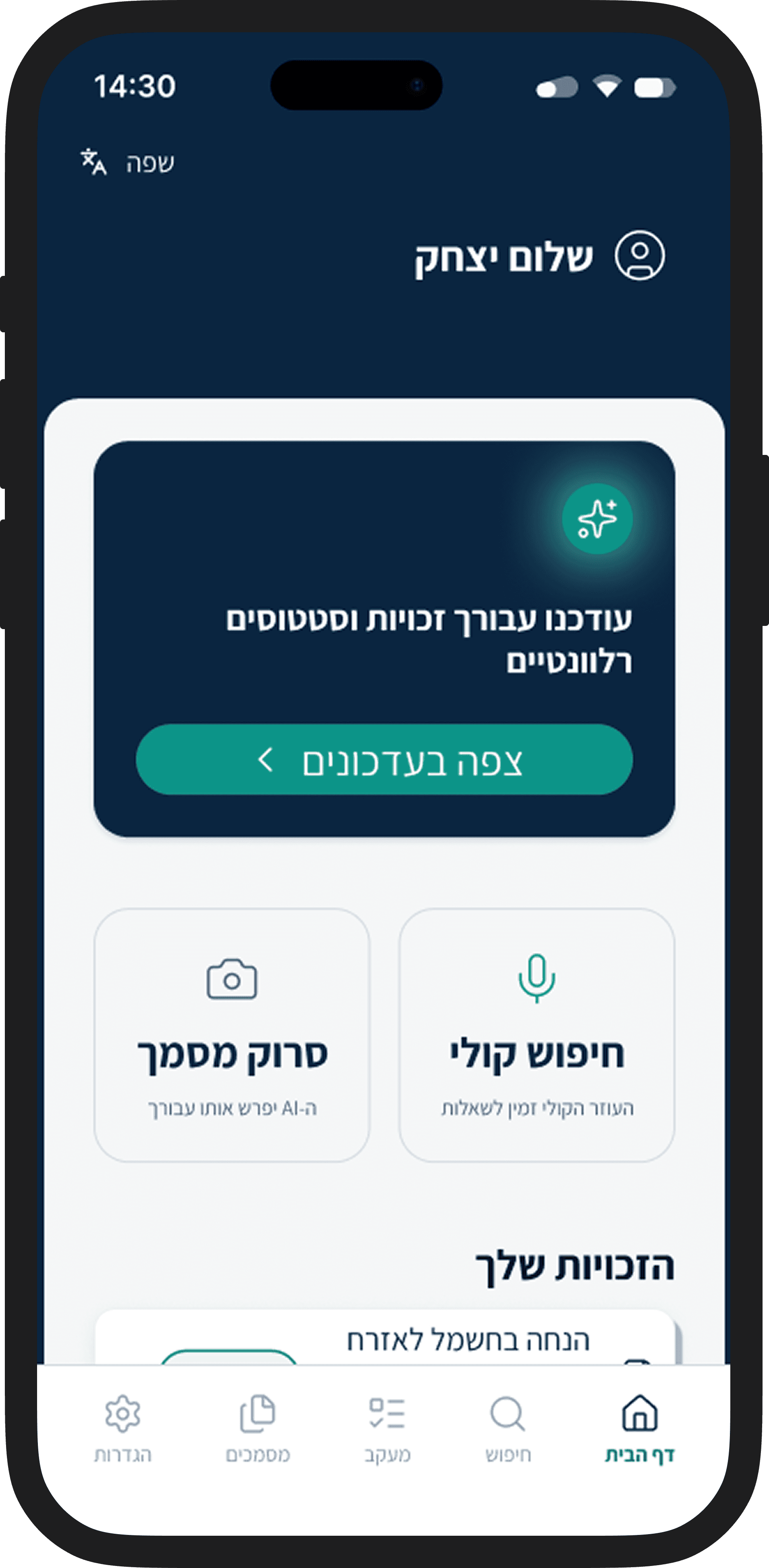
What This Argues: A senior user can understand their rights status, pending actions, and new entitlements at a glance without navigating menus.
Personalized rights summary surfaces proactively based on user profile, not search
Status indicators distinguish between 'available now,' 'pending,' and 'requires action' without legal jargon
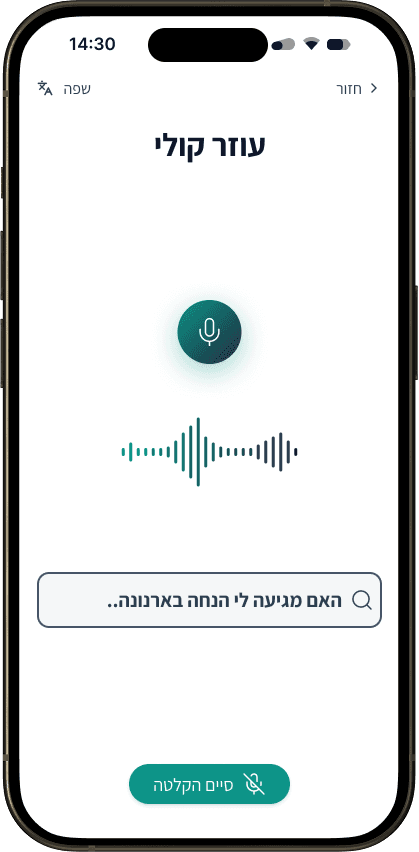
Voice Assistant (Mobile)
What This Argues: Voice input isn't a feature. It's an accessibility requirement for users who find typing in bureaucratic contexts intimidating.
Waveform UI provides real-time feedback that the system is listening and processing
Input is transcribed and confirmed before the AI responds, reducing anxiety about being misheard
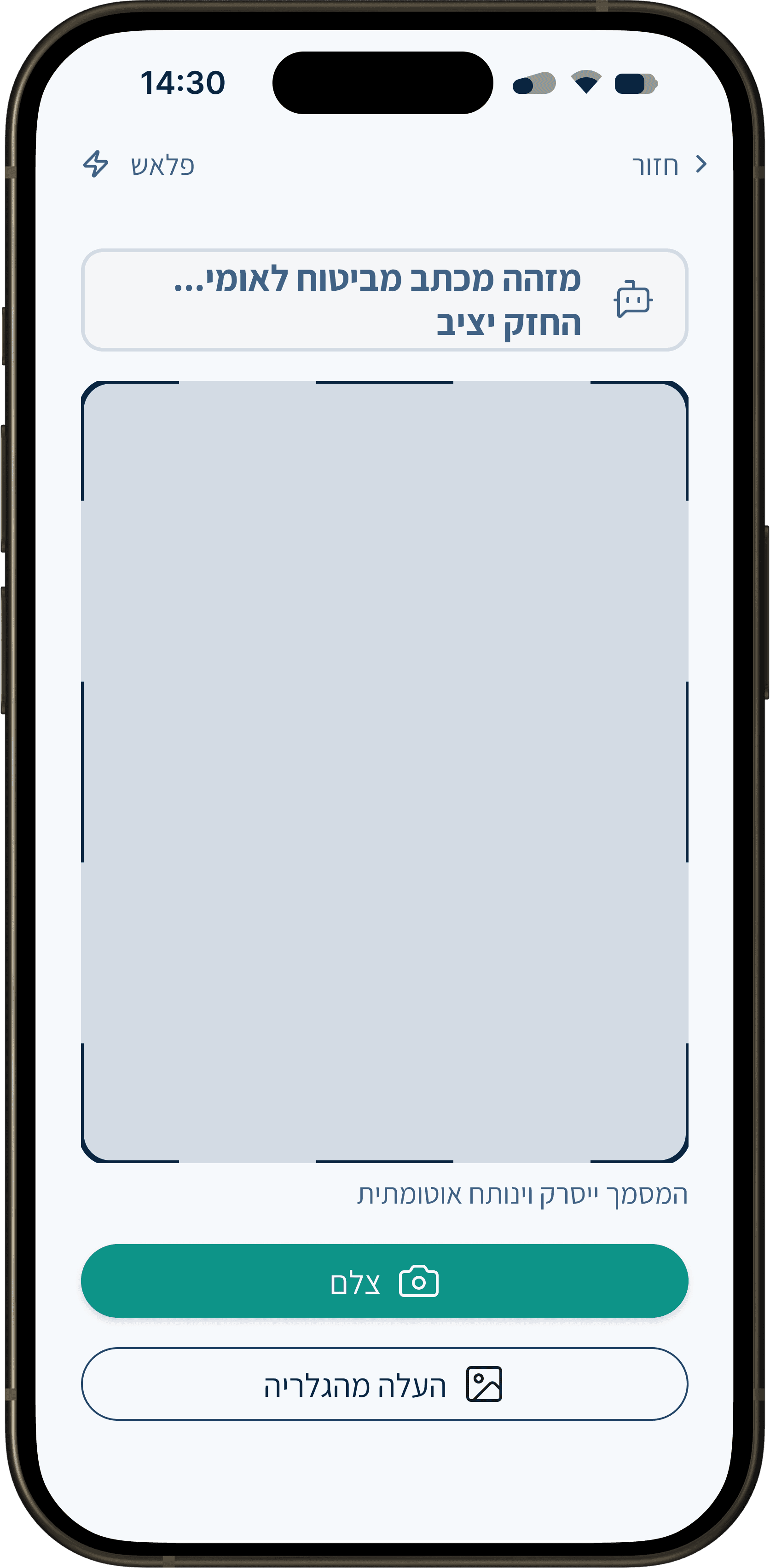
Document Scanner / AI Chat (Mobile)
What This Argues: A new immigrant can resolve white-envelope anxiety in under 60 seconds.
OCR scan feeds directly into AI interpretation — no manual re-typing
AI response includes urgency classification: 'routine update' vs. 'deadline detected'
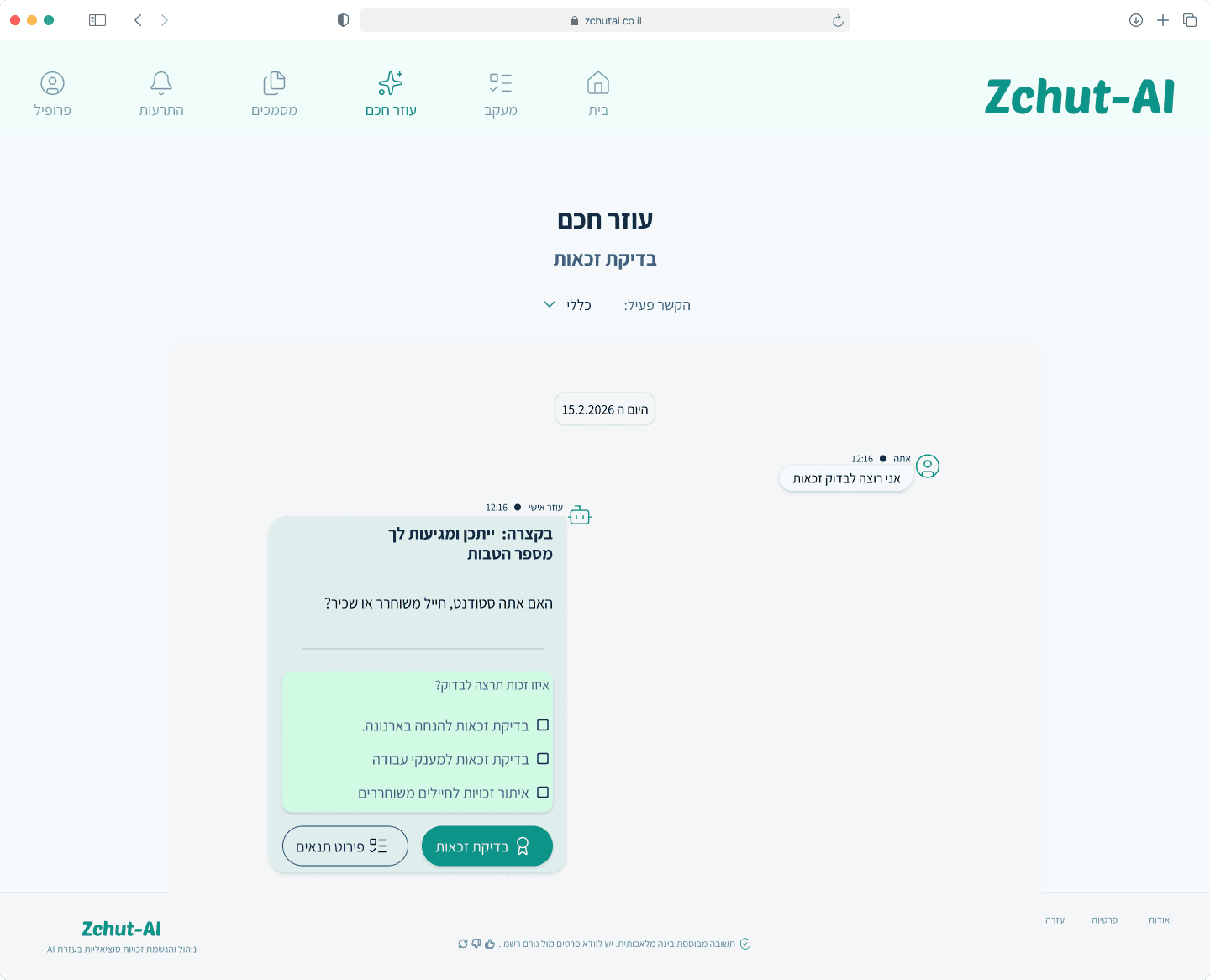
AI Chat with Escalation (Desktop)
What This Argues: When the AI reaches the edge of its competence, the handoff to a human is visible, designed, and context-preserving.
Escalation trigger is shown inline. The user understands why before they're redirected.
Advisor receives full conversation context. The user does not need to re-explain.
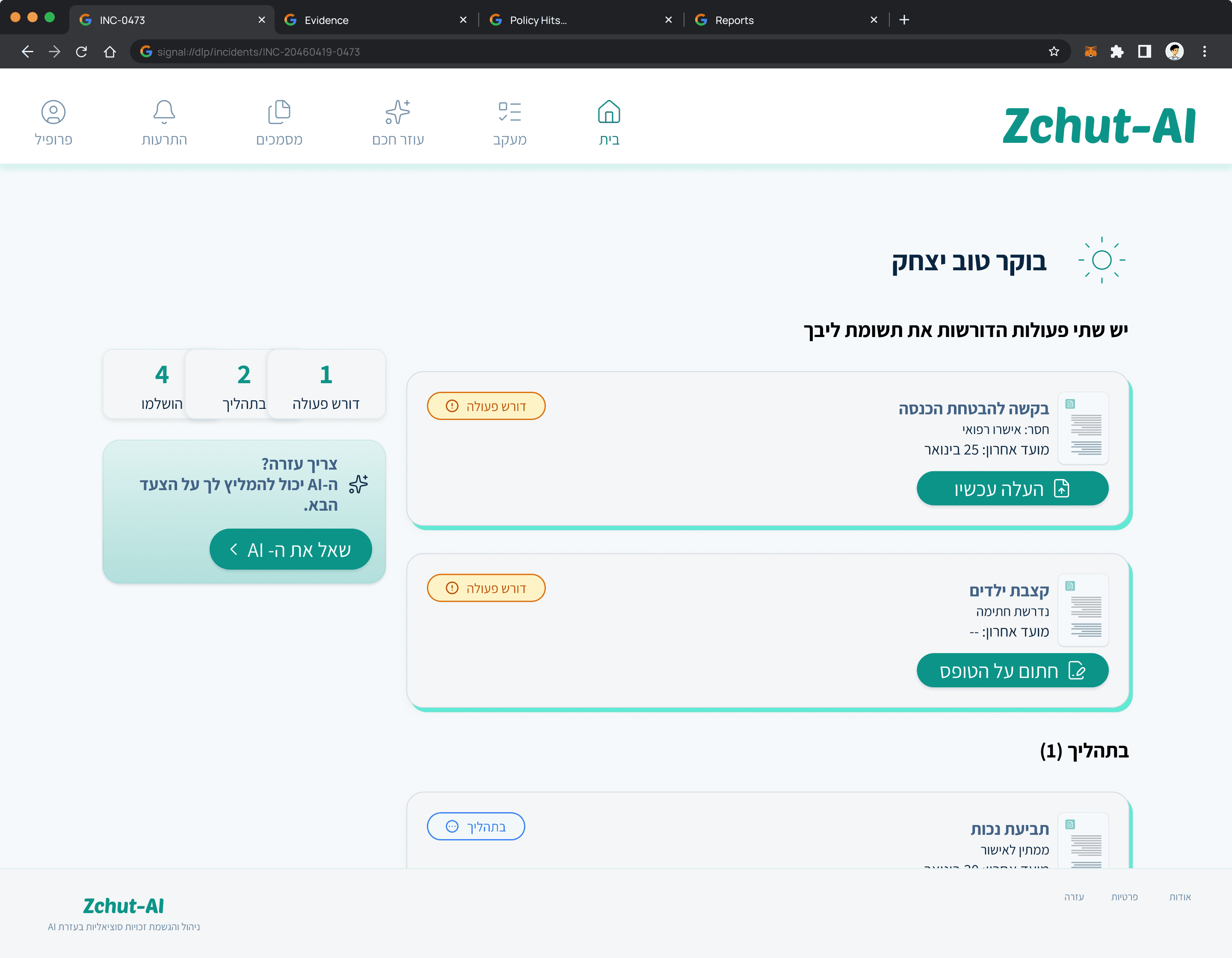
Benefits Dashboard with Deadlines (Desktop)
What This Argues: The system's value isn't just answering questions. It's proactively surfacing entitlements users don't know to ask about.
Deadline tracking is visible and calendar-integrated, removing the fear of missing a critical date.
Progress indicators show where each benefit claim stands in the submission process
Outcome
Zchut-AI demonstrates that designing for extreme users - those most excluded by existing systems - produces a better product for everyone. The dual interaction model, confidence-tiered AI, and escalation system aren't accessibility features bolted on. They're the core architecture.
The project also argues a broader design thesis: AI in high-stakes civic contexts requires a trust layer, not just a response layer.
What real users taught me
Four moderated usability sessions, June 2026. I tested an interactive prototype with four participants: two Israeli-born seniors (Simcha, 76, former chemical engineer; Tami, 72, former kindergarten teacher) and two immigrants from Russia (Yevgeny, 58, musician, who has a mobility disability; Genia, 54, musician, whose husband is disabled). Sessions used a Wizard-of-Oz setup with canned AI responses, so the tests measured comprehension and trust - not AI accuracy.
The confidence indicator backfired
Every participant read the "!" as a warning - but the sub-text said no action was needed. The contradiction undercut the one mechanism the product is built on.
quote
"What does this '!' want from me? If there's nothing to submit, why is it there?" - Tami
before

after

WHAT CHANGED
Reserve "!" for states requiring action. Use a neutral info icon for informational states.
before

after

The invisible user - disability had no category
Both immigrant participants looked for a disability option, didn't find it, and picked a workaround. The two Israeli-born participants never noticed - the gap was invisible to anyone who didn't need it.
quote
"Ask me if I have a disability - that's the most important thing to me." - Yevgeny
WHAT CHANGED
Add disability as a first-class onboarding category, at the same level as immigration status.
Users treated the AI as a starting point, not a verdict
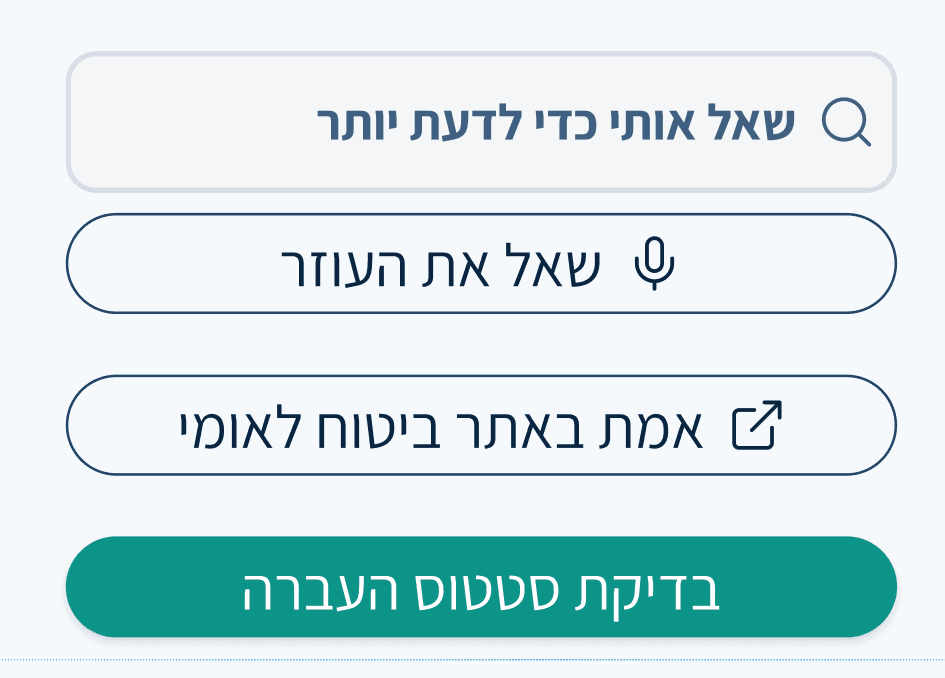
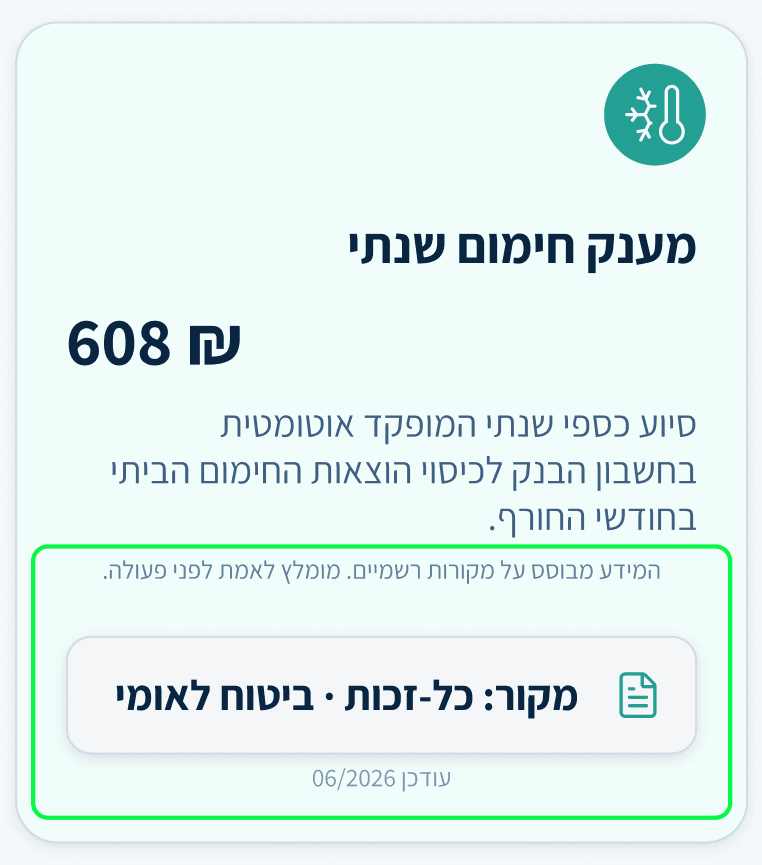
No participant accepted the app as final authority. All four planned to verify with the National Insurance Institute. Specific numbers built more trust than general statements.
quote
"608 isn't a round number someone made up. It looks real." - Tami
before

after

WHAT CHANGED
Frame the AI as the starting point - link to the official source as part of the core design, not a footnote.
Two smaller issues worth noting
Keyword and category search did not match users' mental models. Most participants reached their answer only through the voice tool - which not everyone discovered without prompting. Separately, the "who is eligible" list did not make clear whether all conditions or just one are required. Both issues are addressable; neither rose to the level of a structural finding.
What this confirms
01
Designing for the edges produces better defaults
The disability-category gap was invisible to participants who did not need it. The "!" finding came from all four people independently. Testing with the most-excluded users surfaced problems no persona document would have predicted.
02
AI in high-stakes contexts needs a trust layer, not just a response layer
Getting the signal wrong does not just confuse users. It erodes the one thing the product is trying to build. A visible, well-calibrated trust layer is not a nice-to-have - it is the mechanism.
Methodology note
This was a small qualitative study - 4 participants, not statistically representative. The prototype used a Wizard-of-Oz setup with canned responses, which means findings reflect comprehension and trust, not AI accuracy. I distinguished genuine design problems from prototype-wiring artifacts before drawing conclusions.
© 2026 Guy Bar-Sinai